Industrial pumping applications span an enormous range of process conditions, fluid types, and performance requirements. Choosing a pump from a supplier who genuinely understands the application, rather than simply providing a catalogue product, makes a measurable difference to installation reliability, operational efficiency, and total cost of ownership. Understanding what distinguishes leading oil and gas equipment suppliers and Pump Equipment Manufacturers from the rest helps procurement engineers and facility managers make better decisions when specifying critical pumping equipment.
Engineering Depth That Goes Beyond Catalogues
The most immediately apparent difference between a leading pump manufacturer and a commodity supplier is the depth of engineering support available alongside the product itself. A catalogue can list pump curves and efficiency ratings. Still, it cannot assess whether a given pump is correctly specified for a process application involving non-Newtonian fluids, variable viscosity, entrained solids, or thermally sensitive products.
Leading oil and gas equipment suppliers employ application engineers who understand process conditions across the industries they serve and can translate a customer’s process requirements into a correctly specified pump selection, including the seal configuration, material specification, bearing arrangement, and drive system that the application demands.
Material Knowledge for Demanding Process Fluids
The selection of pump wetted-part materials is frequently the difference between a pump that provides years of trouble-free service and one that corrodes, seizes, or fails within months of commissioning.
| Process Fluid Type | Wetted Part Consideration |
| Hydrochloric acid | Rubber-lined or exotic alloy construction required |
| Produced water with H₂S | NACE-compliant materials essential |
| High-temperature hydrocarbons | API 610 construction with appropriate seal plan |
| Slurries with abrasive solids | Hardened metal or ceramic internal surfaces |
| Viscous crude oils | Large clearance impeller or progressing cavity design |
Leading pump manufacturers have this knowledge embedded in their application engineering team and their product range, they are not specifying stainless steel for every application and hoping it will work.
Range and Capability That Covers the Full Application Spectrum
Industrial process plants require pumps across a wide range of duties, from small chemical dosing pumps handling millilitres per hour to large multistage centrifugals handling thousands of cubic metres per day. A supplier whose range covers this full spectrum can act as a single point of technical responsibility across a project or plant, rather than requiring the customer to manage multiple specialist suppliers for different pump duties.
Leading pump manufacturers typically offer:
- Centrifugal pumps across a wide range of flows and pressures
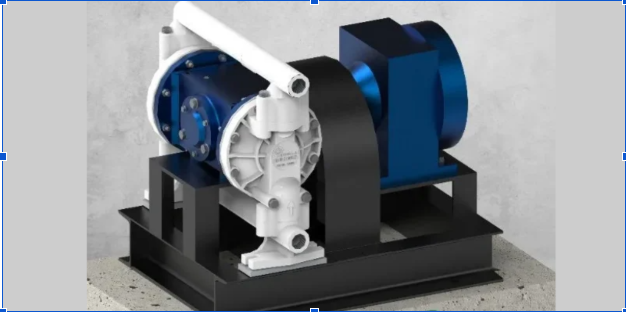
- Positive displacement types including AODD pumps for chemical transfer
- Diaphragm pumps for sensitive or abrasive fluids
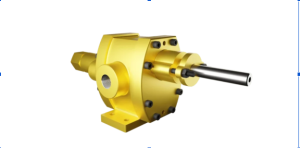
- Gear and screw pumps for viscous liquids
- Metering and dosing pumps for precise chemical injection
Quality Assurance That Goes Beyond Inspection Tags
Quality documentation in the pump industry ranges from a simple inspection tag to a comprehensive quality plan including material traceability certificates, hydrostatic pressure testing records, performance curve testing with witnessed inspection, and third-party certification. The level of quality assurance demanded by the application, and provided by the supplier without having to be specifically requested, distinguishes leading pump manufacturers from lower-tier alternatives.
For oil and gas applications in particular, compliance with API 610, API 675, or ISO 5199 depending on the pump type, is not optional; it is the baseline standard that serious suppliers work to as a matter of course.
After-Sales Support and Spare Parts Availability
A pump is not simply a product; it is the beginning of a long-term relationship between the operator and the manufacturer. Spare parts availability, service engineer support, and the ability to provide a replacement unit quickly when an in-service pump fails unexpectedly are all differentiators that become very visible the first time something goes wrong.
Leading oil and gas equipment suppliers maintain:
- Comprehensive spare parts stocks for their installed pump population
- Service teams capable of on-site inspection, commissioning support, and repair
- Documented maintenance schedules and spare parts recommendations for every pump type supplied
- Quick-response support capability for critical plant breakdowns
Application Experience in Oil and Gas Specifically
The oil and gas sector places demands on pumping equipment that are not always replicated in other industrial applications. ATEX/hazardous area requirements, produced fluid handling with entrained gas and solids, high-pressure injection duties, and the extreme temperatures of cryogenic or refinery applications all require genuine sector expertise.
Oil and gas equipment suppliers who have built their business around this sector understand these demands from experience rather than from a technical specification sheet. This makes a tangible difference to the quality of the guidance they provide and the reliability of the products they recommend.
Conclusion
The leading pump equipment manufacturers distinguish themselves through engineering depth, material expertise, breadth of product range, commitment to quality assurance, and after-sales support capabilities, not simply through competitive pricing on catalogue products. For industrial facilities where pump reliability directly affects production continuity and process safety, these distinctions matter enormously. NND Oil & Gas works with pump equipment manufacturers and oil and gas equipment suppliers who meet these standards, providing customers with pumping solutions that are correctly specified, reliably manufactured, and fully supported throughout their operational life.