Overview
Nancy Tyagi has become a welcome exception in the fashion industry, where designers frequently take centre stage. Nancy, who is from the little Indian hamlet of Baranwa in Uttar Pradesh, had an incredible voyage to the renowned Cannes Film Festival. She is unique not only because of her appearance on the red carpet but also because she designed her own looks, displaying unmatched creativity and tenacity.
Early Years and Upbringing
Nancy’s early years were very different from the glitter and glamour of the fashion world because she was born and reared in Baranwa. She turned to creativity for comfort because she had little possibilities and resources. Nancy would frequently experiment with fabrics using her mother’s old sewing machine, which she owned as a factory worker. She became passionate in clothes design as a result of her modest upbringing.
Gaining Notoriety on Social Media
Nancy used social media to display her artwork during the confinement brought on by the pandemic. Despite having no official training, she started sharing pictures and videos of her homemade clothes since she had a strong sense of style. She immediately gained a sizable following thanks to her distinctive fusion of modern fashion with traditional Indian influences. Her following valued her genuineness and artistry, and social media sites like Instagram served as her runway.
The 2024 Cannes Debut
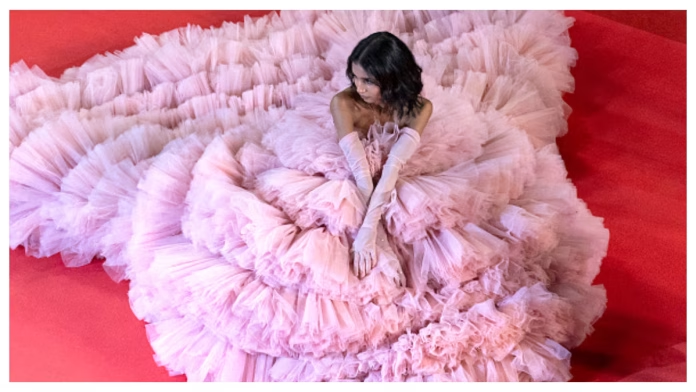
When Nancy received an invitation to the 77th Cannes Film Festival in 2024, it was her big break. many her as well as many aspiring designers from small Indian villages, this was a huge accomplishment. Nancy decided to don a pink ruffled gown that she had fashioned herself for her red carpet debut. She spent a month crafting the garment, which weighed about 20 kg and was constructed from more than 1,000 metres of fabric. Fairy-tale enchantment was evoked by the elaborate design, which included a strapless sequinned bodice and elbow-high gloves.
The Pink Gown’s Creation
For Nancy, making the pink gown was a gratifying and difficult process. She ensured accuracy and quality by painstakingly stitching each piece of fabric using her mother’s antique sewing machine. The voluminous creation of the gown took a great deal of perseverance and commitment. Motivated by her passion and the desire to perform on a global platform, Nancy frequently worked through the night.
Recognition and Reception
Nancy’s dress caused a stir as soon as she arrived in Cannes. She was praised for her creativity and skill by both fashion experts and fans. Among those who commended her work were Indian star Sonam Kapoor and fashion critic Sufi Motiwala. The dress demonstrated not just her talent as a designer but also her capacity to contribute a distinct viewpoint to international fashion.
A Combination of Tradition and Modernity in the Lavender Saree
Nancy chose to wear a lavender saree that she had fashioned herself for her second appearance at Cannes. This outfit combined modern components with traditional Indian clothing. Intricate hand embroidery adorned the saree, while a contemporary twist was imparted by the cowl-necked, backless top. The originality of the ensemble was further highlighted by the addition of a hooded veil. Nancy once again captivated the fashion industry with her inventive approach and meticulous attention to detail.
The Ensemble of Black Corsets
Nancy, who never backs down from a daring choice, wore a black corset suit for her third Cannes appearance. This ensemble, which featured a feathered stole, a tail skirt, and a corset top, was sophisticated and elegant. Nancy’s adaptability and ability to try out various designs were demonstrated by the fully self-designed and sewn costume. Her development as a designer was evident in the ensemble’s elegant style and elaborate decorations.
The Debate: Allegations of Self-Designing
Although many people enjoyed Nancy’s works, there was debate about whether or not her assertions were true. The corset Nancy wore in her black outfit looked a lot like one she had worn before, according to singer Neha Bhasin, who speculated that Nancy might not have made it herself. Subsequent research showed that Nancy had made her own alterations to the corset, which she had bought from a boutique. Discussions over authenticity and uniqueness in the fashion business were spurred by this discovery.
Transparency’s Significance
The dispute brought to light the necessity of openness in the fashion sector, particularly for trend-setting influencers. Although designers frequently use pre-existing works as inspiration, it’s important to give credit where credit is due. Nancy argued that although she might have borrowed some of the ensemble’s components from pre-existing designs, the ensemble as a whole was her own. She talked about her dedication to creativity and her wish to encourage people to follow their dreams.
The Effects on Future Designers
Many aspiring designers find inspiration in Nancy’s story, particularly those from underdeveloped little towns. Her experience serves as a reminder of the value of tenacity, imagination, and openness to new ideas. Nancy’s accomplishment shows that anyone, regardless of background, can overcome challenges and realise their dreams if they have passion and determination.
Social Media’s Impact on Career Development
Social media sites like Instagram have been crucial to Nancy’s success. They have given her a stage on which to display her abilities, engage with a worldwide audience, and work with professionals in the field. The fashion industry has become more accessible because to social media, which has given people from all walks of life the chance to establish themselves and become well-known.
Goals for the Future
Nancy’s long-term goal is to launch her own fashion brand that combines modern styles with traditional Indian components. Her goal is to establish a company that supports sustainable fashion methods and empowers women. In order to assist young, ambitious designers in overcoming the obstacles of the fashion industry, Nancy also intends to mentor them by sharing her expertise and experiences.
In conclusion
Nancy Tyagi’s journey from a small Uttar Pradesh town to the Cannes Film Festival red carpet is proof of the strength of drive, tenacity, and imagination. In addition to showcasing her talent, her self-designed outfits brought attention to India’s rich cultural legacy. Even though disputes can occur, they also present chances for development and education. Numerous others are still motivated to follow their aspirations and push the limits of fashion by Nancy’s narrative.