Retirement planning in India has traditionally revolved around finances, housing, and healthcare access. Cognitive wellness — the active maintenance of mental sharpness, emotional balance, and purposeful engagement — is rarely given equal weight. Yet, the quality of senior citizen care services an elder receives will ultimately determine the nature of their retirement years. These years may be defined by vitality and connection or by gradual withdrawal and decline.
Retirement is increasingly understood not as a single event but as a long arc — potentially spanning two or three decades — during which the conditions of daily life compound in their effect on how well the mind holds up. For families thinking seriously about long-term wellbeing, cognitive wellness cannot be left to chance. It must be built into the environment, the daily schedule, and the care philosophy of wherever an elder chooses to live.
How Do Senior Citizen Care Services Define Cognitive Wellness?
Cognitive wellness is broader than the absence of dementia. It encompasses mental sharpness, emotional regulation, the ability to learn and adapt, the maintenance of meaningful relationships, and the sustained experience of purpose in daily life. A senior living community that genuinely prioritises cognitive wellness designs its environment, activity programme, nutritional approach, and personalised care to promote residents. Communities that focus only on physical safety and medical management are meeting a narrower standard — one that may keep residents alive without keeping them truly well in any meaningful sense.
Retirement Is a Cognitive Transition, Not Just a Financial One
The shift from working life to retirement removes several structures that have quietly supported cognitive health for decades: professional purpose, workplace relationships, time-based routines, and the mental engagement that comes with problem-solving and decision-making. Without deliberate replacement of these structures, cognitive decline can begin earlier than it would otherwise. This is why choosing the right home for senior citizens is not simply about comfort — it is about ensuring that the transition into retirement does not inadvertently remove the conditions under which the brain continues to function well.
The Role of Purpose and Routine in Long-Term Cognitive Health
Research on ageing consistently shows that elders who maintain a sense of purpose — who feel that their days have meaning and that they contribute something to those around them — experience slower rates of cognitive decline and lower rates of depression. Structured daily routines that include mentally engaging activities, social interaction, physical movement, and opportunities for creative expression provide the scaffolding that cognitive wellness requires. The best luxury retirement communities are those that build this scaffolding into the daily lived experience of residents, not as a supplement to care but as its core expression.
How Environment Shapes the Ageing Brain
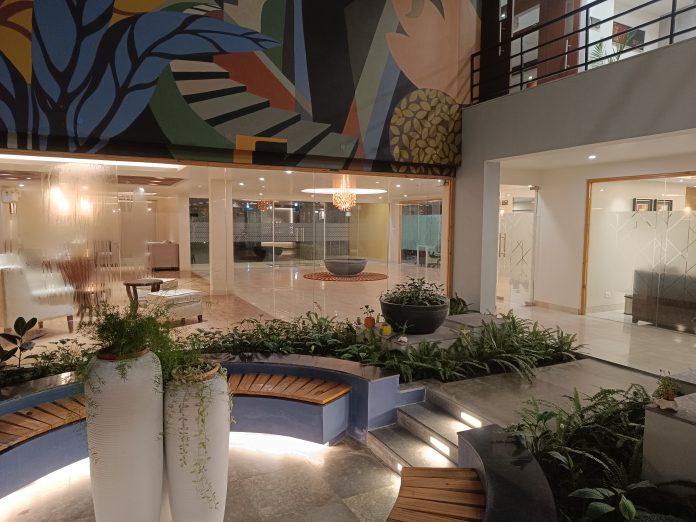
The physical environment of a senior living community has a direct impact on cognitive health. Natural light supports circadian rhythms, which regulate sleep and mood — both of which affect cognitive performance. Green spaces and access to nature reduce stress hormones that, when chronically elevated, damage the brain regions associated with memory. Calm, well-designed common areas encourage social interaction and reduce sensory overload. Noise, crowding, and institutional design all work in the opposite direction. Families evaluating luxury retirement homes should look as carefully at the quality of the physical environment as they do at the list of services offered, because the environment operates continuously and invisibly on every resident’s mental state.
Social Life as a Core Component of Cognitive Wellness
The connection between social engagement and cognitive health is one of the best-established findings in ageing science. Older adults who participate regularly in group activities, maintain meaningful friendships, and feel genuinely connected to a community show significantly better cognitive trajectories than those who are socially isolated. In a luxury senior living setting, this means that the quality and frequency of communal life — meals taken together, cultural events attended, conversations had — is a clinical matter, not merely a lifestyle preference. A house for senior citizens that invests in building a genuine community rather than simply filling beds is investing directly in the cognitive wellness of every person it serves.
Nutrition and Cognitive Wellness in Senior Living
The brain’s nutritional requirements are specific and often poorly served in residential care settings that prioritise convenience over composition. Adequate intake of omega-3 fatty acids supports neuronal membrane integrity. B vitamins play a critical role in homocysteine metabolism, elevated levels of which are closely associated with cognitive decline in older adults. Antioxidants from fresh fruit and vegetables reduce oxidative stress in brain tissue. Hydration, often overlooked in institutional settings, affects concentration and mood in ways that become more pronounced with age. Senior communities serious about cognitive wellness treat the kitchen as a cognitive health resource and plan menus accordingly.
Sleep, Stress, and the Brain’s Recovery Needs
Two of the most powerful drivers of cognitive deterioration in older adults are chronically disrupted sleep and unmanaged stress. Sleep is when the brain clears metabolic waste, consolidates memory, and repairs neural tissue — functions that cannot be deferred or compensated for by naps or medication. Stress, particularly when prolonged, floods the brain with cortisol, a hormone that at sustained levels causes measurable damage to the hippocampus, the region most critical for memory formation. A well-designed senior living environment addresses both by managing noise, light, and activity schedules to support natural sleep cycles, and by creating conditions of safety, autonomy, and relational warmth that reduce the background stress many older adults carry without naming it.
What to Look for When Evaluating a Senior Community’s Cognitive Wellness Approach
Families serious about cognitive wellness should evaluate senior living communities on specific criteria. Does the daily schedule include mentally stimulating activities — not just passive entertainment but learning, creativity, and inter-generational engagement? Does the care team provide personalised support to residents experiencing cognitive changes? Does the nutritional programme reflect the brain’s dietary needs? Is the physical environment calm, green, and well-lit? Are residents treated as active participants with genuine choices about how they spend their time? These questions reveal far more about a community’s philosophy than any brochure can.
Cognitive wellness is not a luxury feature of good retirement living — it is the difference between a retirement that feels like a continuation of a rich life and one that feels like a slow withdrawal from it. Families who treat cognitive health as a core criterion when choosing where an elder will live are making one of the most consequential decisions they face. The standard to apply to any senior citizen care services under consideration is this: does this place actively support the conditions under which the mind stays alive, connected, and purposeful? If the answer is yes, everything else follows.
Frequently Asked Questions
Q1. What is cognitive wellness and how is it different from treating dementia?
Cognitive wellness refers to the active maintenance of mental sharpness, emotional balance, and purposeful engagement throughout the ageing process. It is preventive and proactive, not reactive. Treating dementia addresses a condition that has already developed. Cognitive wellness is about creating the conditions — through environment, lifestyle, social engagement, and nutrition — that reduce the risk of decline occurring in the first place and slow its progression when it does.
Q2. How does the physical environment of a senior community affect cognitive health?
The physical environment influences cognitive health continuously and largely invisibly. Natural light supports sleep quality and mood regulation, both of which affect cognitive performance. Green spaces and access to nature reduce the stress hormones that damage memory centres over time. Calm, well-designed spaces encourage social interaction and reduce sensory overload. Poorly designed environments — noisy, crowded, institutional — create low-level chronic stress that compounds over time and measurably accelerates cognitive decline in older residents.
Experience how Jagriti Dham builds cognitive wellness into the everyday life of its residents. Book a scheduled visit and see the community in person.
About Jagriti Dham
This article was curated by the Jagriti Dham team (www.jagritidham.com). Jagriti Dham is Kolkata’s most luxurious senior citizen home and Eastern India’s first IGBC-certified green senior living facility, situated near Joka on Diamond Harbour Road. A project of the Infinity Group, Jagriti Dham promotes active ageing and builds an age-integrated society where elders live independently while receiving the finest professional care.
Follow us: Facebook | YouTube | Google My Business | LinkedIn | Instagram